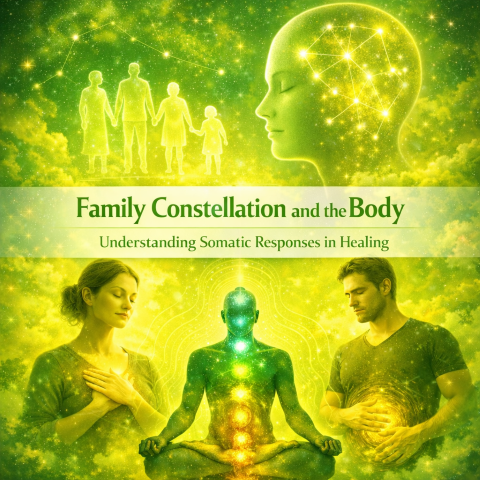
How our bodies hold family stories and why physical sensations matter in therapeutic work
When Sarah walked into her first Family Constellation workshop, she expected conversation and insight. What she didn’t anticipate was the sudden heaviness in her chest when standing in for someone’s grandmother, or the inexplicable urge to step backward when representing a father figure. Her body knew something before her mind could articulate it.
This is the essence of somatic responses in Family Constellations—a therapeutic approach that recognizes our bodies as repositories of ancestral memory, family trauma, and relational patterns. Unlike traditional talk therapy, Family Constellation work operates on the premise that healing happens not just through intellectual understanding, but through embodied experience.
What Is Family Constellation Work?
Developed by German psychotherapist Bert Hellinger in the 1990s, Family Constellation therapy is a transgenerational approach that explores hidden dynamics within family systems. The method typically involves a group setting where participants serve as representatives for members of someone’s family system, even if they know nothing about that family’s history.
What makes this work particularly fascinating is how representatives consistently report physical sensations, emotions, and impulses that mirror the actual experiences of the family members they’re representing. A representative might feel sudden anxiety, experience pain in a specific body part, or feel compelled to move in certain directions—all without any prior information about the person they’re standing in for.
This phenomenon points to something profound: our bodies carry information that transcends individual experience.
The Science Behind Somatic Memory
While Family Constellation work may seem mystical, emerging research in neuroscience, epigenetics, and trauma studies provides compelling frameworks for understanding these bodily responses.
Embodied Cognition and Implicit Memory
Neuroscientist Antonio Damasio’s research on embodied cognition demonstrates that our bodies are integral to how we process and store information. The body doesn’t just execute the brain’s commands—it actively participates in creating meaning and memory.
Trauma researcher Bessel van der Kolk famously stated that “the body keeps the score,” highlighting how traumatic experiences are stored in implicit memory systems. Unlike explicit memories that we can consciously recall, implicit memories live in our bodies as sensations, postures, and automatic responses.
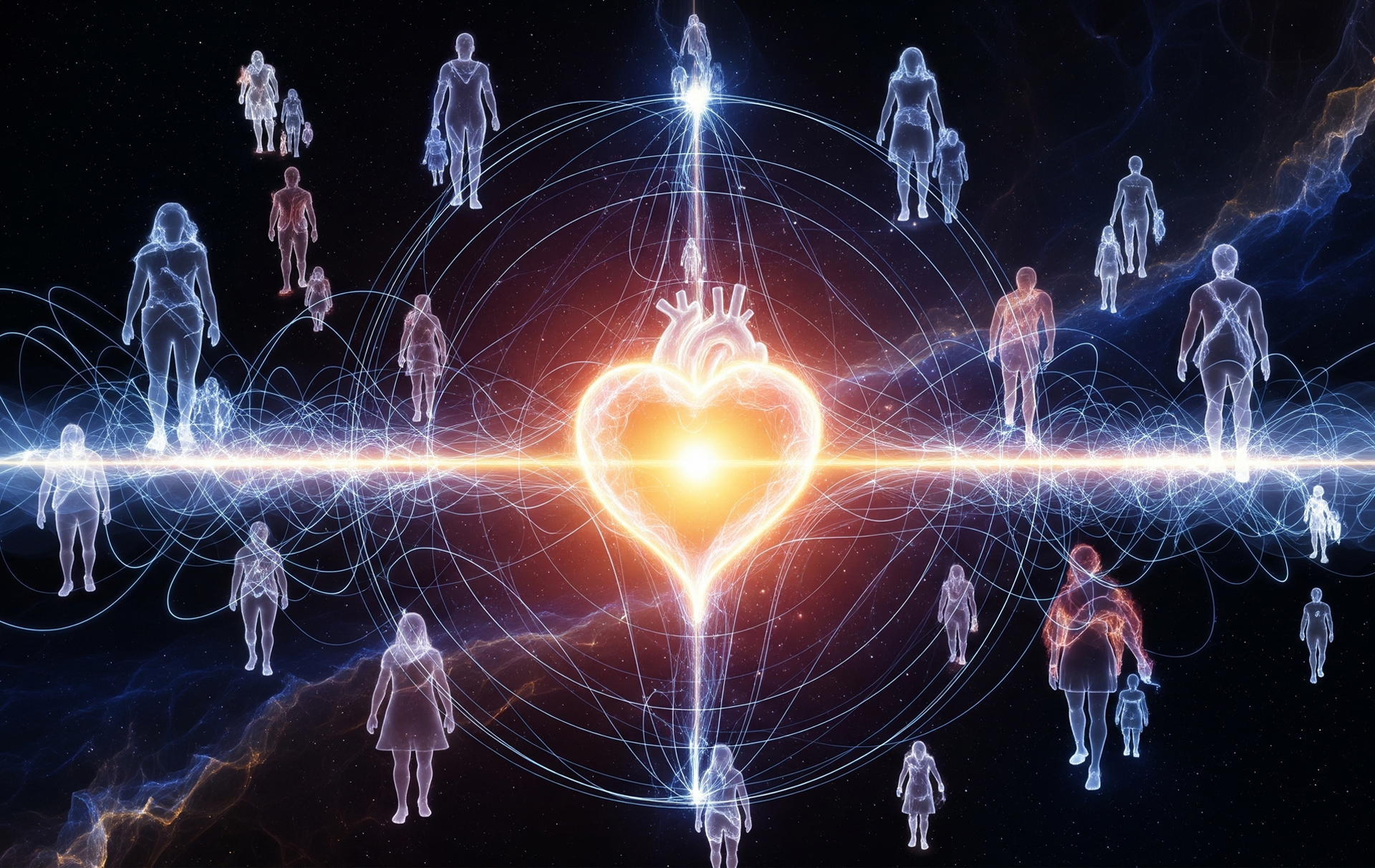
In Family Constellation work, representatives may be accessing these implicit memory systems—not their own personal memories, but something more collective or field-based.
Epigenetic Inheritance
Recent epigenetic studies suggest that traumatic experiences can leave chemical marks on genes that are passed down through generations. Research on Holocaust survivors and their descendants, as well as studies on famine and trauma, indicate that our ancestors’ experiences may literally be encoded in our biology.
This means when a representative in a constellation suddenly feels overwhelming grief or fear, they might be tapping into genuine inherited patterns that exist within the family system being explored.
The Morphic Field Theory
Biologist Rupert Sheldrake’s controversial but intriguing theory of morphic resonance proposes that families and groups create informational fields that can be accessed by individuals tuning into them. While not widely accepted in mainstream science, this theory offers one explanation for how representatives can accurately sense family dynamics they have no conscious knowledge of.
Common Somatic Responses in Constellation Work
Understanding the language of the body is essential to Family Constellation practice. Here are the most common physical manifestations that emerge during this work:
Physical Sensations
| Body Response | Possible Systemic Meaning |
|---|---|
| Heaviness in chest or shoulders | Carrying burdens for others; loyalty to family suffering |
| Sudden cold or trembling | Exclusion from family system; ancestral trauma |
| Nausea or stomach tension | Rejection of family patterns; resistance to belonging |
| Weak knees or loss of balance | Lack of support; unstable family foundation |
| Tension in neck or jaw | Unspoken truths; suppressed expression |
| Warmth or expansion in heart | Connection; love flowing in the system |
Movement Impulses
Representatives often report irresistible urges to move—stepping backward, turning away, reaching out, or collapsing. These movements aren’t random; they reveal the relational dynamics at play.
A representative who keeps turning away from “the mother” might be revealing how the actual child feels unseen or rejected. Someone who feels compelled to lie down might be representing death, illness, or someone who was forgotten in the family system.
Emotional Waves
Emotions can arise suddenly and intensely during constellation work—grief, rage, terror, or profound peace. These emotional responses often don’t belong to the representative personally but emerge from the family field being explored.
One participant described it as “crying tears that weren’t mine, yet feeling relieved afterward, as if something ancient had been released.”
Why the Body Matters: Beyond Cognitive Understanding
Traditional psychotherapy often prioritizes insight and cognitive understanding. Family Constellation work suggests that genuine healing requires the body’s participation. Here’s why:
The Limits of Talking
Talk therapy can help us understand our problems intellectually, but understanding alone rarely creates lasting change. We can know why we struggle with intimacy or feel anxious, yet the pattern persists. This is because the body holds patterns that the mind cannot simply think away.
Accessing Pre-Verbal Trauma
Many family patterns originated before we had language—in infancy, during birth, or in previous generations. These experiences are encoded somatically, not narratively. To heal them, we must work at the bodily level where they’re stored.
Creating New Felt Experiences
Family Constellation work creates new embodied experiences that can rewire our nervous systems. When a representative feels genuine acceptance from a parent figure after years of perceived rejection, the body registers this healing moment. This felt experience can begin to transform long-held patterns.
The Constellation Process: A Body-Centered Journey
Let me walk you through what actually happens in a typical Family Constellation session, emphasizing the somatic dimension:
Setting Up the Constellation
The client (whose family is being explored) briefly describes their issue. The facilitator then asks the client to choose representatives from the group for key family members. This selection process itself is often somatic—the client might feel drawn to certain people without knowing why.
The client then physically places these representatives in the space, positioning them in relation to each other. This spatial arrangement already begins to reveal family dynamics.
Tuning Into the Field
Once in position, representatives are instructed to simply notice what they feel in their bodies. This is the crucial somatic element. They’re not asked to act or imagine—just to report sensations, emotions, and impulses as they arise.
A facilitator might ask: “What do you notice in your body right now?”
Responses might include:
- “I feel very small and want to curl up”
- “My chest feels tight and I can’t breathe deeply”
- “I feel pulled toward her but afraid to get closer”
- “I want to turn around—I can’t look at him”
Following the Body’s Wisdom
The facilitator works with these somatic cues, often making small adjustments to positioning or introducing new representatives. As the constellation unfolds, representatives’ physical states often shift dramatically.
A representative who entered feeling heavy and burdened might suddenly experience lightness. Someone who felt disconnected might feel a warming in their heart when facing the right direction. These bodily shifts indicate movement toward resolution.
Integration Through the Body
The most powerful moments in constellation work often involve simple physical gestures: a bow, a touch, eye contact, or words spoken while facing someone directly. These embodied actions carry more healing power than hours of discussion could achieve.
Challenges and Considerations
When the Body Overwhelms
Sometimes somatic responses in constellation work become overwhelming. Representatives might experience intense physical pain, dissociation, or emotional flooding. Skilled facilitators know how to regulate intensity and create safety.
It’s important that participants have the option to step out of a representative role if the sensations become too much. The body’s wisdom includes knowing its limits.
Cultural and Individual Differences
How people experience and express somatic responses varies across cultures and individuals. What feels like “heaviness” to one person might register as “sleepiness” to another. Facilitators must be sensitive to these differences and not impose interpretations.
Integration Takes Time
The body needs time to integrate new information and experiences. After constellation work, it’s common to feel tired, emotional, or physically different for days or weeks. This is the nervous system reorganizing around new possibilities.

Family Constellation Therapy
Larry Mark Honig, PhD
Empowering families through transformative and compassionate constellation therapy.
Conclusion: Listening to Our Cellular Wisdom
While anecdotal evidence for Family Constellation work is abundant, rigorous research is still emerging. Studies are beginning to document physiological changes during constellation work—shifts in heart rate variability, cortisol levels, and nervous system regulation.
As our understanding of collective trauma, epigenetics, and embodied cognition deepens, Family Constellation therapy may gain greater acceptance in mainstream psychology. The body-centered approach aligns with current trauma treatment trends that emphasize somatic therapies.
Family Constellation work invites us to recognize that our bodies are not just vehicles carrying our minds through the world—they are intelligent systems that hold generations of experience, wisdom, and possibility.
When Sarah experienced that heaviness in her chest during her first workshop, her body was speaking a truth her mind didn’t yet understand. By learning to listen to these somatic signals, we access healing pathways that pure cognition cannot reach.
The next time you notice an unexplained tension, a sudden emotion, or a strange impulse in your body, consider: What might this be telling me? Whose story might I be carrying? What wants to be healed?
Your body knows. It has been waiting for you to listen.




Add your first comment to this post
You must be logged in to post a comment.